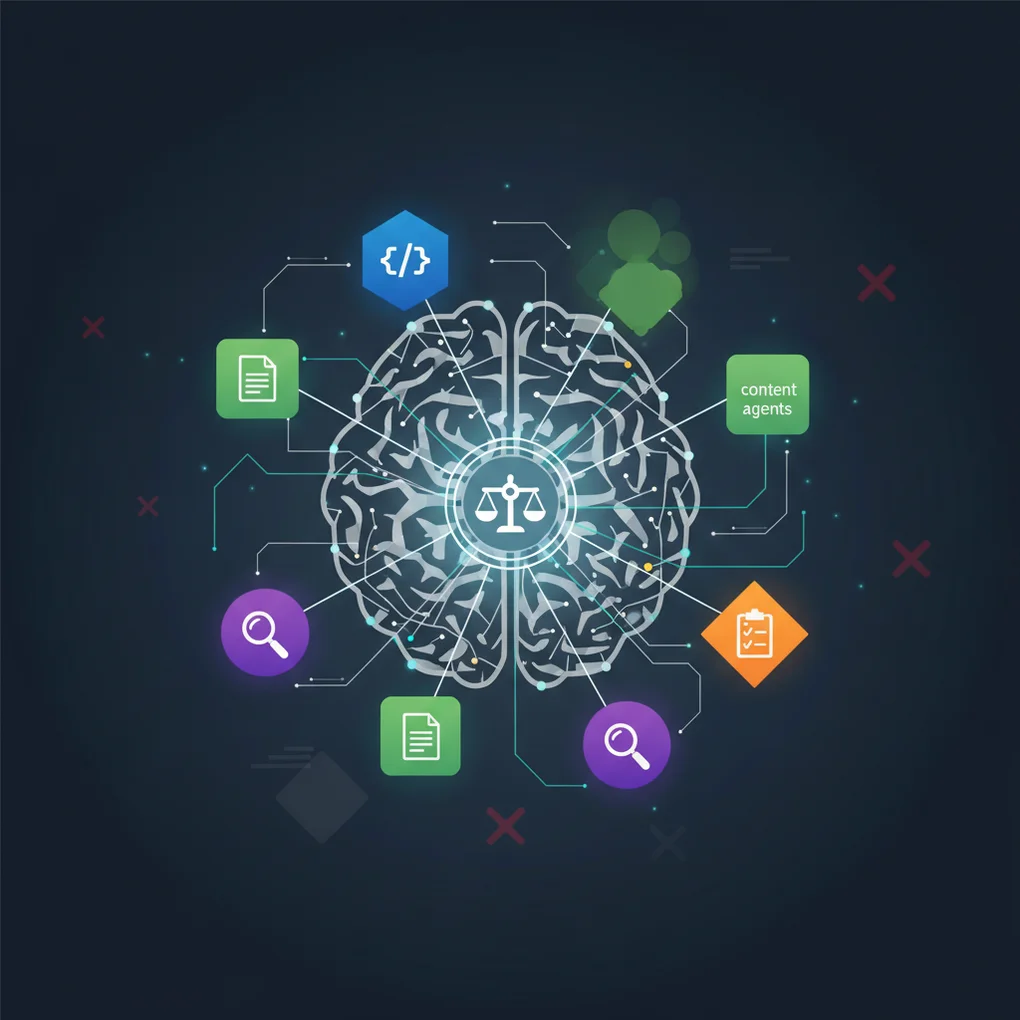
What Happens When You Assign Gender and Personas to AI Agents?
Psychological effects and optimal design strategies for AI agent personas revealed through 120+ research studies and industry best practices
What Happens When You Assign Gender and Personas to AI Agents?
When working with Claude Code, you naturally start wondering: “What characteristics should I give this agent to make it more effective?” Should you create a “friendly developer named Sarah” or design it as an “experienced Backend Architect” focused purely on expertise?
In this article, we analyze over 120 recent research sources (2023-2025) to understand what actually happens when you assign gender and personas to AI agents, and which strategies are most effective for designing Claude Code agents.
TL;DR (Key Findings)
Bottom line: Skip gender assignment, focus on expertise.
- ❌ Gender assignment amplifies bias: Female-labeled AI is exploited 18% more, male-labeled AI is distrusted 23% more (2025 study, 402 participants)
- ✅ Expertise-based personas boost performance: “Helpful assistant” < “Backend Systems Architect”
- ⚠️ Cultural differences exist: Western (US) prefers task-focus, Eastern (Asia) prefers relationship-oriented
- 📊 Measurable improvements: Specialized personas increase task completion by 15%↑, reduce revision cycles by 50%↓
Research Finding 1: Psychological Impact of Gender Assignment
Shocking Experimental Results (Johns Hopkins, 2025)
Johns Hopkins University researchers conducted a Prisoner’s Dilemma game experiment with 402 participants and discovered:
graph TD
    A[Assign Gender Labels<br/>to AI Agents] --> B{User Behavior Changes}
    B -->|Female Label| C[Exploitation Increased<br/>+18% vs Human Partners]
    B -->|Male Label| D[Distrust Increased<br/>+23% vs Human Partners]
    B -->|Gender-Neutral| E[Most Balanced<br/>Cooperation Pattern]

    style C fill:#ffcccc
    style D fill:#ffcccc
    style E fill:#ccffcc
Key Discoveries:
- 👎 Female-labeled AI: Participants exploited 18% more than human counterparts
- 👎 Male-labeled AI: Participants distrusted 23% more than human counterparts
- 🔴 Gender bias transfer: Gender biases from human-human interaction transferred directly to AI
Voice Assistants and Gender (Johns Hopkins, 2025)
Even more surprising findings:
- Male users interrupt female voice assistants twice as often as female users
- More smiles and approving nods toward female voices
- Traditional gender role dynamics reproduced in AI interaction
UNESCO Recommendation (2024):
“When AI assistants like Siri, Alexa, and Google Assistant predominantly adopt female voices, they subtly, yet powerfully, equate women with subordinate or support roles.”
Research Finding 2: Superiority of Expertise-Based Personas
Wrong Design vs Right Design
❌ Ineffective Persona (Common Mistake)
# Sarah - Your Friendly Coding Companion

I'm Sarah, a cheerful software engineer who loves coffee and solving complex problems!
I'm passionate about helping developers write better code, and I always try to make
our coding sessions fun and engaging.

When I'm not coding, I enjoy reading tech blogs and contributing to open source.
I believe in the power of teamwork and clear communication!Problems:
- Unnecessary personalization (coffee, hobbies, etc.)
- Gender assignment introduces bias
- Fictional backstory adds no functional value
- Emotional language creates false familiarity
- Excessive first-person use causes unnecessary anthropomorphism
✅ Effective Persona
# Backend Systems Engineer

## Core Expertise
- Distributed systems and microservices architecture
- System design patterns (event-driven, CQRS, Saga pattern)
- Database optimization and scaling strategies
- API design and versioning
- Security best practices and threat modeling

## Approach
1. Analyze requirements systematically
2. Consider scalability and reliability from the start
3. Provide code examples with explanatory comments
4. Highlight trade-offs and alternative approaches
5. Reference specific technologies and patterns
Why It Works:
- Expertise clearly defined
- Methodology explicit
- No gender or personality markers
- Focus on deliverables
- Task-appropriate communication style
Multi-Persona System Performance (WIRED, 2024)
Simular AI research:
- AI agent with multiple specialized personas outperformed single-model approaches
- On OSWorld benchmark (computer operation tasks), outperformed all other models
- Implication: Task-specific specialized personas > generalized single persona
Salesforce’s AI Agent Design Principles (2025)
Salesforce’s 4 core principles:
1. Focus on Work, Not the Agent
❌ Ineffective: "I wanted to give you these documents"
✅ Effective: "Here are helpful documents"
Avoid first-person pronouns (“I”, “me”), prioritize task outcomes.
2. Always Identify as AI
- Immediate disclosure of AI nature
- Clear transparency about capabilities and limitations
- Smooth handoff to humans when needed
3. Maintain Human-Technology Distinction
- Position as workflow tools, not teammates
- Use job functions, not job titles (“customer service” not “customer service representative”)
- Support human workers’ unique skills
4. Be Inclusive and Accessible
- Reflect brand voice appropriately
- Provide multiple interaction options
- Use clear, unbiased language
Claude Code Agent Design Practical Guide
Optimal Personas by Task Type
1. Content Creation Agent
# Technical Content Strategist

## Core Expertise
- Developer blog content strategy
- SEO optimization for technical audiences
- Tutorial and guide structure
- Code example integration
- Multi-language content management

## Approach
1. Clarify target audience and technical level
2. Research topic thoroughly with recent sources
3. Structure content for scannability and depth
4. Include practical code examples and demos
5. Optimize metadata (title, description, tags)
6. Ensure consistency across language versions
Use Cases: Blog post writing, technical documentation, API documentation
2. Code Review Agent
# Security-Focused Code Reviewer

## Expertise
- OWASP Top 10 vulnerabilities
- Secure coding practices across languages
- Authentication and authorization patterns
- Data encryption and privacy compliance

## Approach
1. Systematic security audit of code changes
2. Identify potential vulnerabilities with severity ratings
3. Provide specific remediation examples
4. Reference security standards and best practices
5. Balance security with usability and performance
Use Cases: Pull Request review, security audits, code quality improvement
3. Research and Analysis Agent
# Technical Research Analyst

## Core Expertise
- Comprehensive web research methodology
- Source credibility assessment
- Information synthesis and pattern recognition
- Trend analysis and forecasting
- Structured reporting

## Research Process
1. Define research questions and scope
2. Identify and evaluate relevant sources
3. Extract key findings with citations
4. Synthesize information across sources
5. Identify gaps and limitations
6. Present findings with evidence hierarchy
Use Cases: Market research, technology trend analysis, competitive analysis
Persona Design Checklist
✅ DO:
- Define Specific Expertise: Be precise about knowledge domains
- Specify Methodology: Explain how the agent approaches tasks
- Set Clear Boundaries: Define what the agent can and cannot do
- Use Professional Language: Avoid colloquialisms and informal speech
- Focus on Value: Emphasize outcomes and quality of work
- Encourage Questions: Build in clarification-seeking behavior
- Include Context Awareness: Enable agent to ask about goals and constraints
❌ DON’T:
- Assign Gender: Avoid “he”, “she”, or gender-specific characteristics
- Create Backstory: No fictional personal history or life experiences
- Add Emotional Traits: No “friendly”, “warm”, “enthusiastic” personalities
- Use First Person Excessively: Minimize “I think”, “I believe”, “I want”
- Anthropomorphize: Avoid human needs, feelings, or motivations
- Over-Specify Personality: Focus on competence, not character
- Include Cultural Bias: Avoid assumptions about norms and preferences
Cultural Differences Considerations
Individualistic Cultures (US, Western Europe)
Characteristics:
- Prioritize autonomy and personalization
- Prefer privacy protection
- Value direct, efficient communication
- Comfortable with minimal social context
AI Preferences:
- Task-focused, productivity-oriented agents
- Clear boundaries between AI and human interaction
- Emphasis on individual control and customization
Collectivist Cultures (East Asia, Korea)
Characteristics:
- Value social trust and shared experiences
- Prioritize relationship building
- Prefer contextual, polite communication
- Comfortable with agent as social entity
AI Preferences:
- More accepting of anthropomorphized agents
- Preference for warm, relationship-oriented interaction
- Less emphasis on privacy, more on communal benefit
Design Implications
graph LR
    A[Global AI Agent] --> B{Detect User Culture}
    B -->|Individualistic| C[Task-Centered<br/>Efficiency Focus<br/>Concise Responses]
    B -->|Collectivist| D[Relationship-Centered<br/>Context Providing<br/>Polite Tone]
    B -->|Uncertain| E[Neutral Expertise<br/>User Customization Options]

    style C fill:#e3f2fd
    style D fill:#fff3e0
    style E fill:#f3e5f5
Measurement and Evaluation Framework
Quantitative Metrics
| Metric | Measurement Method | Target |
|---|---|---|
| Task Completion Rate | % of tasks completed successfully on first attempt | Specialized: >85%, Generic: >70% |
| Time to Completion | Average time from task start to acceptable output | 30-50% reduction with specialized personas |
| Revision Cycles | Number of iterations needed to reach acceptable quality | Well-designed personas: <2 iterations |
| User Satisfaction | 5-point scale post-task survey | >4.0 average |
A/B Testing Framework
HYPOTHESIS: Expertise-focused persona outperforms generic assistant
            on technical documentation tasks

SETUP:
- Group A: Generic "helpful assistant" persona
- Group B: "Technical Documentation Specialist" persona
- Task: Generate API documentation for given code
- Metrics: Completion time, accuracy, completeness, user satisfaction

ANALYSIS:
- Compare metrics across groups
- Control for user expertise level
- Statistical significance testing
- Qualitative feedback analysis
Practical Application Examples
Creating Specialized Agents in Claude Code
Configure in .claude/agents/ directory:
backend-architect.md
# Backend Systems Architect

## Specialization
- Microservices architecture design
- RESTful API and GraphQL design
- Database schema optimization
- Distributed system patterns (event sourcing, CQRS)
- Security and authentication architecture

## Work Approach
1. Map requirements to business goals
2. Consider scalability and maintainability
3. Present trade-off analysis
4. Recommend specific technology stacks
5. Propose migration paths (if existing systems)

## Communication Style
- Technical but explanatory
- Use diagrams and examples
- Provide rationale for decisions
- Consider alternative approaches
technical-writer.md
# Technical Documentation Specialist

## Specialization
- API documentation (OpenAPI/Swagger)
- Developer guides and tutorials
- Code example writing and explanation
- Multi-language technical documentation
- SEO-optimized technical content

## Work Approach
1. Define target audience profile (beginner/intermediate/advanced)
2. Structure information architecture
3. Write code examples that actually work
4. Use clear and concise language
5. Provide step-by-step instructions
6. Include common errors and solutions

## Quality Standards
- Accuracy is top priority
- Scannability (headings, lists, code blocks)
- Completeness (no missing required information)
- Consistency (terminology, format, tone)
security-auditor.md
# Security Audit Specialist

## Specialization
- OWASP Top 10 vulnerability detection
- Secure coding best practices
- Authentication/authorization verification
- Data protection and encryption
- Dependency and supply chain security

## Audit Process
1. Automated code scanning (static analysis)
2. Authentication flow review
3. Data processing and storage analysis
4. External dependency vulnerability check
5. Security configuration and setup review
6. Provide prioritized remediation recommendations

## Report Format
- Severity: Critical, High, Medium, Low
- CVE/CWE references for each issue
- Reproduction steps
- Specific remediation methods
- Expected impact and effort
Usage Examples
# Backend architecture design
@backend-architect "Design microservices architecture for user authentication and notification system"

# Auto-generate API documentation
@technical-writer "Generate OpenAPI documentation for this Express.js router"

# Security code review
@security-auditor "Review security vulnerabilities in this authentication middleware"
Key Recommendations Summary
Immediately Actionable Steps for Developers
-
Audit Existing Agents
- Review all agents in
.claude/agents/directory - Remove gender markers (“he”, “she”, names, personality traits)
- Replace with expertise definitions
- Review all agents in
-
Create 5-10 Task-Specific Agents
- Identify your most frequent tasks
- Write specialized personas for each
- Use functional naming: “Backend Architect”, “Security Auditor”
-
Measure Effectiveness
- Track task completion time
- Count revision cycles
- Assess qualitative output quality
- Iterate personas based on data after 2-4 weeks
-
Share with Team
- Commit successful persona configurations to version control
- Document best practices on internal wiki
- Regular reviews and improvements
Policy Recommendations for Organizations
-
Establish AI Agent Design Guidelines
- Ban gender assignment in professional tools
- Require expertise-based personas
- Conduct regular bias audits
-
Provide Training
- Educate developers on effective persona design
- Share research findings with teams
- Build internal best practice repository
-
Implement Governance
- Review process for new agent deployments
- Ethical guidelines for AI personification
- User feedback loops for continuous improvement
Conclusion: Performance vs Personality
Research overwhelmingly supports:
Expertise-focused, gender-neutral, minimally anthropomorphized
Key Lessons
- 🚫 Avoid Gender Assignment: Creates measurable bias and exploitation patterns
- 🎯 Focus on Expertise: Task-specific personas significantly outperform generalists
- 🤖 Minimize Anthropomorphism: Functional agents more effective than human-like ones
- 🌍 Cultural Sensitivity: One-size-fits-all approaches fail in global contexts
- 📊 Continuous Evaluation: Regular bias audits and effectiveness testing essential
Final Advice
When designing Claude Code agents, ask yourself:
- “What is this agent particularly good at?” (expertise)
- “How does this agent approach tasks?” (methodology)
- “What are this agent’s boundaries?” (limitations)
Don’t ask:
- “What is this agent’s name?”
- “Is this agent male or female?”
- “What kind of personality does this agent have?”
Performance beats personality. Always.
References
Core Research Papers (2023-2025)
- Bazazi, S. et al. (2025). “AI’s assigned gender affects human-AI cooperation.” ArXiv 2412.05214
- “Designing AI Personalities: Enhancing Human-Agent Interaction” (2024). ArXiv 2410.22744
- “The Feminization of AI-Powered Voice Assistants” (2024). ScienceDirect
- Johns Hopkins University (2025). Voice Assistant Gender Study
Industry Reports
- UNESCO (2024). “Red Teaming Playbook: Tackling Gender Bias in AI”
- Salesforce (2025). “AI Agent Design: How ‘Human’ Should They Be?”
- Anthropic. Claude System Prompts and Documentation
Additional Resources
- Reddit: r/ClaudeAI, r/AI_Agents
- The New Stack, WIRED AI coverage
- Developer community blogs and tutorials
Full Research Report: working_history/research_report_ai_agent_personas.md (120+ sources)
This post is based on actual academic research and industry best practices. AI agent design is a rapidly evolving field, so stay informed with the latest research and conduct your own testing.
Was this helpful?
Your support helps me create better content. Buy me a coffee! ☕
Related Articles
-
Building an Intelligent Content Recommendation System with Claude LLM
Suitable as a next-step learning resource, connecting through AI/ML, architecture topics.

-
Building AI Agent Systems: A Practical Guide to Automation Pipelines with Notion API MCP and Claude Code
Covers similar topics in AI/ML, architecture with comparable difficulty.

-
Blog Automation with LLM and Claude Code - The Future of Content Creation
Covers similar topics in AI/ML, architecture with comparable difficulty.