Hermes Agent — The Open-Source AI Agent That Evolves With Every Task
I installed NousResearch's Hermes Agent v0.7.0. It auto-generates skill documents after each task and references them on the next run. Here's whether the self-evolution loop actually works.
Thirty minutes after running pip install hermes-agent, I thought: “okay, this one’s different.”
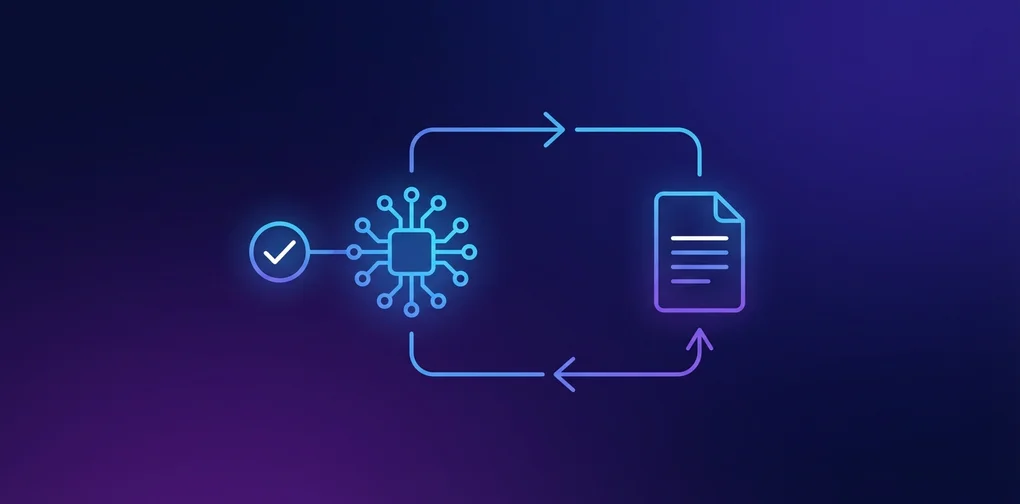
With AI agent frameworks popping up daily, Hermes Agent holding a Top 5 spot on GitHub Trending for two consecutive weeks isn’t just marketing. The key is the self-evolution loop — every time you complete a task, the agent automatically generates a skill document, and references it the next time a similar task comes up for faster, more accurate execution.
What Is Hermes Agent
It’s an MIT-licensed AI agent framework by NousResearch. Two months after its February 2026 initial release, it’s hit 33,000 GitHub stars, 4,200 forks, and 142 contributors. v0.7.0 “The Resilience Release” shipped on April 3rd.
Three core concepts:
- Automatic skill generation: Completes a complex task, then auto-creates a reusable skill document
- Plugin memory: Maintains memory across sessions with swappable backends
- Multi-platform: CLI, Telegram, Discord, Slack, WhatsApp, Signal, Email — all supported
Honestly, looking at the feature list alone, it’s easy to think “just another agent framework.” I did too, at first.
I Installed It and Tried It
Installation is surprisingly clean.
# One-liner install — handles Python, Node.js, ripgrep, ffmpeg dependencies automatically
curl -fsSL https://hermes-agent.nousresearch.com/install.sh | bash

# Or directly via pip
pip install hermes-agent

# First run
hermes
The installer sets up the Python virtual environment, dependencies, and global hermes command in one go. LLM provider configuration is interactive on first run — pick OpenRouter and you get access to 200+ models immediately. The hermes model command lets you switch models with no code changes, freely moving between Nous Portal, OpenAI, Kimi, MiniMax, and others.
Does the Self-Evolution Loop Actually Work
This is the crux. Many agent frameworks claim they “learn,” but in practice it’s usually just prompt caching or conversation history.
Hermes takes a different approach:
- After completing a complex task, the agent automatically organizes the process into a skill document
- Skill documents are saved to
~/.hermes/plugins/or.hermes/plugins/ - When a similar task comes in next time, the tool discovery phase references these documents
What made this pattern interesting to me personally is that it’s structurally similar to Claude Code’s CLAUDE.md. You write “follow these rules in this project” in CLAUDE.md, and the agent reads and acts on it in the next session. Hermes just automates that whole process. For a different take on how agents maintain context across sessions, the Hindsight MCP agent memory architecture is worth comparing.
But to be honest, the quality of auto-generated skill documents isn’t consistent yet. Simple file operations or API calls produce pretty usable skills, but complex tasks that depend heavily on context sometimes miss the point. v0.7.0 added DSPy + GEPA-based evolutionary self-improvement via the NousResearch/hermes-agent-self-evolution repo, but that’s still closer to experimental.
Architecture Overview
The core structure is simpler than expected:
run_agent.py    → AIAgent — core conversation loop
cli.py          → HermesCLI — terminal UI
model_tools.py  → tool discovery & dispatch
hermes_state.py → SQLite session/state DB (FTS5 full-text search)
Tool discovery pulls from three sources:
~/.hermes/plugins/— user plugins.hermes/plugins/— project-specific plugins- pip entry points — package-installed plugins
The biggest change in v0.7.0 is memory becoming a plugin system. Previously, context reset at session end. Now you can swap memory backends, share memory across agents, or build custom memory providers.
What Changed in v0.7.0
| Change | Description |
|---|---|
| Plugin memory | Swappable and shareable memory backends |
| Button-based approval UI | Confirmation before risky operations |
| Inline diff preview | Shows changes before file modifications |
| API server session persistence | Sessions survive gateway restarts |
| Camofox browser | Built-in browser agent |
Compared to Other Frameworks
I don’t think this is a silver bullet that replaces everything. For comparison:
Claude Code/OpenClaw — Coding-specialized with strong IDE integration. CLAUDE.md-based project rules are manual but controllable. If writing code is your primary goal, Claude Code is still better.
LangChain/CrewAI — Strong at workflow orchestration, but lacks the concept of agents growing on their own. Executes along predefined graphs. How multi-agent collaboration affects benchmark performance is covered in the SWE-bench multi-agent performance analysis.
Hermes Agent — A general-purpose agent where self-improvement is the core. Better suited for daily automation, research, and communication hubs than coding. Multi-platform support is particularly strong. For enterprise-scale agent deployment, the Stripe autonomous coding agents handling 1,300 PRs case study shows what that looks like in practice.
Honestly, I think “self-evolution” might be a bit overhyped. The current level is closer to “documenting task records for reuse” than fundamentally changing like humans learn from experience. But I have to admit that the automation of documentation itself already has significant value.
Who Should Use This
- Individual developers who want to handle tasks from multiple chat platforms with a single agent
- Teams automating repetitive work who are tired of rewriting prompts every time
- People who want to customize their agent framework but find LangChain’s abstraction layers excessive
- Those who use Claude Code for coding but want a separate agent for non-coding automation
The MIT license and zero model lock-in are nice touches. With OpenRouter alone you get 200+ models, so cost optimization stays flexible.
Final Thoughts
I’m not going to call Hermes Agent “revolutionary” or say it “changes the paradigm.” But automating the “task → skill generation → reuse” loop at the framework level is clearly meaningful. There’s a reason it hit 33K stars in two months.
Personally, I’m most excited about v0.7.0’s plugin memory system. Once memory sharing between agents becomes serious, we might break past the current “one chat window = one context” limitation. Whether this project can maintain its momentum until then is the real question, of course.
Was this helpful?
Your support helps me create better content. Buy me a coffee! ☕
Related Articles
-
Automating Semi-Annual Presentation Creation with AI: From 60 Hours to 10
Covers similar topics in automation, AI/ML with comparable difficulty.

-
Claude Code /insights Review: What 4,516 Messages Reveal About My AI Coding Patterns
Covers similar topics in automation, AI/ML, architecture with comparable difficulty.

-
Multi-Agent Parallel Execution Outperforms Single Models on SWE-bench — Verdent AI 76.1%
Covers similar topics in automation, AI/ML, architecture with comparable difficulty.